
One Health

Communicable diseases remain one of the major causes of mortality worldwide. There are disparities in the numbers of individuals affected by disease between low-and-middle-income countries and those in developed nations. Despite the biological and clinical knowledge of health and disease expanding every single day, people are still dramatically affected by treatable and curable diseases across the world, every single day.
Microorganisms are often associated closely with disease, commonly as a causative agent. However, it is essential to recognise that microbes are also an essential tool in the treatment and prevention of a wide range of diseases. Microbes will play in important role in drug discovery: producing anticancer drugs and antimicrobials. Applying One Health principles, to understand the interaction of pathogens and the human host, development of diagnostics, treatments, and disease prevention, applied microbiologists can shape global health and wellbeing outcomes.
Read the latest research on one health from AMI’s journals here.
One Health Advisory Group members

Sally Cutler
Sally's passion for microbiology started with a BSc degree course from University College London from which she graduated in 1981. Her research interests are largely focussed upon spirochaetes and bacterial zoonoses, particularly those with an impact upon developing countries. Sally has been a member of AMI since the days when it was the Society for Applied Bacteriology.

Kate Lagerstrom
Kate recently completed her PhD in Biology at Stanford University where she studied the genetic diversity of distribution of Escherichia coli among a wild animal community. She will soon begin a post-doctoral research position at Princeton University where she will continue to study human impacts on host-associated microbial communities. Since 2024, Kate has served as a trustee on AMI's Executive Committee.
- Twitter:
- @kate_lagerstrom

Lesley Oglive
Lesley is Director of the Secretariat at the Global AMR R&D Hub, a global partnership focused on addressing challenges and improving co-ordination and collaboration in AMR R&D using a One Health approach. She has over 15 years-experience working in academia as a researcher and lecturer at the University of Brighton and the Max Planck Institute for Molecular Genetics, focused on the human gut virome and the discovery and characterisation of therapeutic phage. Lesley represents the Global AMR R&D Hub on a number of advisory groups, including for the World Health Organisation and the European Commission.

Supram Hosuru Subramanya
Dr. Supram's research interests include infectious diseases and antimicrobial resistance. His main focus is on genomic one-health surveillance and understanding in-depth how multi-drug resistant bacteria (MDRs) colonize and infect humans in order to provide the best possible healthcare. He has collaborated with researchers around the world. Supram has published more than 50 peer-reviewed articles. Currently, he is an Associate Editor for journals such as Journal of Antimicrobial Chemotherapy-Antimicrobial Resistance (JAC-AMR) and PLOS ONE. He has received more than 20 awards from various international scientific societies. Having demonstrated excellence in research and commitment to advancing healthcare epidemiology, infection prevention, and diagnostics in LMICs, Supram was appointed as an International Young Ambassador of Science by the American Society for Microbiology (ASM) and the Society for Healthcare Epidemiology of America (SHEA). In his previous position as assistant professor of microbiology at Manipal College of Medical Science, Nepal, he oversaw the diagnostic microbiology laboratory in addition to teaching medical students.
Upon obtaining his bachelor and master of science degrees in medical microbiology, Supram did his doctoral research on the AMR one-health approach and received his Ph.D. from the Manipal Academy of Higher Education, India.

Adam Roberts
Graduated in Applied Biology from Coventry University in 1995 and with a PhD in molecular microbiology from the University of London in 2002. Worked as a Post-Doctoral Research Fellow, Lecturer and Senior Lecturer at University College London until joining LSTM in February 2017. His research activities focus on the emergence and spread of antimicrobial resistance amongst bacteria and the development of new drugs in order to treat infections. He is an advisor to the Longitude Prize and the Royal Society of Hygiene and Tropical Medicine, runs The Transposon Registry(opens in a new tab) and co-ordinates the JPIAMR funded Network of European and African Researchers on AMR (NEAR-AMR(link is external)(opens in a new tab)).

Caterina Guzman-Verri
Caterina holds a Professorship position at the Veterinary School at Universidad Nacional, Costa Rica, associated to the Tropical Disease Research Program. Her research group is interested in understanding why microorganisms cause infection in humans and animals. Most disease-causing microorganisms in humans come from inappropriate contact with animals, where transgression of natural barriers is critical. Being able to understand how these biological barriers are transgressed, particularly how a microorganism can adapt to living in another host, is relevant in order to understand how the microorganisms that cause damage emerge. Bacteria of the genus Brucella share 96-98% similarity at genome level, despite infecting different species of animals. We use high-resolution techniques, such as the sequencing of complete genomes of Brucella, combined with molecular and cell biology approaches, in order to understand how specificity is stablished in different animal species.

James Ebdon
Prof James Ebdon is an Environmental Microbiologist interested in the role of water in the spread and control of water-related diseases. He is particularly interested in how we can protect human health and the aquatic environment. His teaching and research focus on three main areas: (i) the monitoring and provision of safe water and sanitation in low-resource settings; (ii) the behaviour of microorganisms (bacteria and viruses (including phages) in engineered and natural environments; and (iii) the development and application of innovative, low-cost methods for assessing water quality and treatment efficacy. In Malawi, he worked on a UNICEF-funded 'Assessment of Drinking Water Quality in Rural Areas' which led to the re-design and improved management of rural wells, providing low-income communities with safer drinking water. More recently, he was involved in a Gates Foundation-funded project in India 'SaniPath Typhoid' which sought to enhance understanding of typhoid transmission pathways in India’s mega-slums (Kolkata).
He is currently leading an ELRHA-funded collaboration with the International NGO Médecins Sans Frontières (MSF) at the Rohingya refugee camp, Cox’s Bazar, Bangladesh which is optimising the chemical treatment of human faecal waste during the onset of humanitarian crises.

Guadalupe Virginia Nevarez Moorillon
Dr. Nevárez-Moorillón has been a full-time professor at the School of Chemical Sciences, Autonomous University of Chihuahua, Mexico, for the last 35 years. She graduated as a bacteriological chemist from the Autonomous University of Chihuahua. She completed her Ph.D. in Biology from the University of North Texas studying the bioremediation of soil contaminated with hydrocarbons, under the supervision of Dr. Gerard Roland Vela. She is a member of the National Outstanding Researchers System of Mexico (Level II) and has been granted the National Award on Food Science and Technology. She is also a regular member of the Mexican Academy of Sciences.
Her research interests include environmental microbiology, as well as predictive microbiology applied to food systems, the role of lactic acid bacteria in traditional fermented foods, and antimicrobial properties of spices, such as clove and oregano. Under her supervision, more than 50 undergraduate students, as well as more than 50 master students and 15 doctoral students have completed their degrees.
Dr. Nevárez-Moorillón also serves as AMI's Global Ambassador for Mexico.
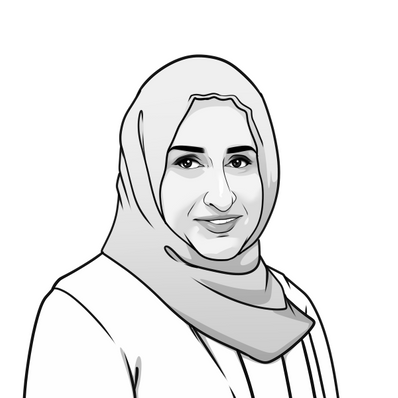
Delveen Ibrahim
Since 2006, I have been a lecturer at the University of Duhok in the Biology Department of the College of Science. My PhD in Microbiology from Nottingham University in the UK was awarded to me in 2017. My doctoral research focused on ESBL-producing E. coli and multi-drug resistance. This study involved phenotypic evaluation of the selected isolates, molecular characterization of several resistance genes, whole genome sequencing of selected strains to examine the genetic and genomic context surrounding -lactamase genes. My goal is to better understand how bacteria are killed by current and previous antimicrobial treatments, as well as how bacteria develop resistance to them. Currently, I am a Global ambassador for AMI and a junior editor for Letters in Applied Microbiology (LAM) journal.

Binod Rayamajhee
Binod joined the School of Optometry and Vision Science, UNSW, Sydney in March 2020 to pursue his PhD project on corneal infection focusing Acanthamoeba keratitis under the supervision of Dr Nicole Carnt and Prof Mark Willcox of UNSW, Sydney and Prof Fiona L. Henriquez from the Infection and Microbiology Research Group at the University of the West of Scotland (UWS). Binod holds a Master’s in medical microbiology from Tribhuvan University, Nepal in 2017. After completion of his master, Binod worked in different organisations in his home country focusing on infectious diseases, antimicrobial resistance and infection control where he has cofounded a research institute in 2017 targeting infectious diseases and has received some noteworthy grants in the past. Binod has profound interest in interdisciplinary collaboration with diverse groups of people for open science, science advocacy, and science for all so, advocating, and championing for translational research are particular interests of Binod outside of his laboratory walls. On the same note, he has served as a community Ambassador of eLife Sciences Publications Ltd., UK (2019 - 2020) and an international representative for the Early Career Scientists (ECS) Committee, AMI (2018 - 2019).

Sean Gibbons
Sean Gibbons received his PhD in biophysical sciences from the University of Chicago in 2015, dual-advised by Jack Gilbert and Maureen Coleman. His graduate work focused on using microbial communities as empirical models for testing ecological theory. Gibbons completed his postdoctoral training in Eric Alm’s laboratory in the Department of Biological Engineering at MIT from 2015-2018. His postdoctoral work focused on developing techniques to quantify individual-specific eco-evolutionary dynamics within the human gut microbiome. Gibbons investigates how the structure and composition of evolving ecological networks of microorganisms change across environmental gradients. In particular, he is interested in how ecological communities in the gut change and adapt to individual people over their lifespans (i.e. host genotype, host development and host behavior) and how these changes impact human health. His lab develops computational and experimental tools for investigating host-associated microbial communities to explore the interactions between ecology, evolution and ecosystem function, applying these insights to develop personalized interventions for improving human health and well-being.

Blessing Mbaebie Oyedemi
Dr Blessing Mbaebie Oyedemi is a research fellow at Nottingham Trent University with research interest in natural product drug discovery for molecular mechanisms of antimicrobial resistance research (AMR), both in academia and clinical research settings. As an AMI member, her passion resonates as an advocate for sustainable antimicrobial interventions through research, strengthening education and promoting policy.
She believes strongly in the values of AMI and the opportunities provided to all levels of scientists, researchers, and all public walks of life to be a change agent trying to solve everyday challenges and influence change through microbiology

Burkhard Tümmler
Burkhard Tümmler received his doctorates in the fields of physical chemistry and human genetics in 1979 and 1984 respectively. After a research stay at the Hospital for Sick Children in Toronto, he worked at the Institute for Biophysical Chemistry of the Hannover Medical School from 1983, and habilitated in 1991 in the field of biochemistry. Having the personal history of many years of basic, translational and clinical research on cystic fibrosis, he currently investigates the population biology, genomics, pathogenicity and physiology of Pseudomonas aeruginosa and studies the airway microbial metagenome in health and chronic lung diseases such as asthma, bronchiectasis or cystic fibrosis.
Research interests: cystic fibrosis; respiratory infections; chronic lung disease; airway microbiome; Pseudomonas aeruginosa; Pseudomonas genomics; next generation sequencing

Hasan Yesilkaya
I studied veterinary medicine at Ankara University Turkey. After completion of my PhD in Leicester on oxidative stress resistance of important human pathogen Streptococcus pneumoniae under the supervision of Prof Peter Andrew I worked in Utrecht as an EMBO fellow then moved to Aberdeen University where I studied transposable elements of Mycobacterium tuberculosis as a postdoctoral fellow. Since 2003 I have been working as a research fellow (2003-2012) lecturer (2012-2020) then as an associate professor (2020 onward) at the University of Leicester.

Elaine Cloutman-Green
Dr Elaine Cloutman-Green has worked as a Clinical Scientist since 2004. In 2015 she completed a PhD under the NIHR CSO Doctoral Fellowship scheme and her research on prevention of healthcare associated infection led to an NIHR ICA Clinical Lectureship award in 2016. In 2015 she was appointed the first UK based International Ambassador for the Society of Healthcare Epidemiology of America. In 2016 she became a Fellow of the Higher Education Academy, Royal College of Pathologists and was appointed as a NICE Expert. She represents Healthcare Scientists as part of the ACB, and as Country Ambassador for the American Society of Microbiology.

Hannah Trivett
Hannah completed her undergraduate degree in Microbiology in 2020 and recently completed her PhD in Medical Microbiology at the University of Liverpool. Her PhD investigated the utility of long-read metagenomics and Hi-C sequencing to resolve closely related organisms found within the gastrointestinal tract and the feasibility of integrating metagenomics into infectious disease diagnostic workflows. Her PhD included a qualitative study to explore the current infectious disease diagnostic landscape and the practicalities of integrating metagenomics for routine use in clinical microbiology laboratories.
In 2024 Hannah joined the Hall Lab as a Research Fellow at the University of Birmingham to explore microbe-microbe interactions using experimental and bioinformatic approaches across several human microbiomes, including the vaginal and gut microbiome and their impact on human health.

Sarah Hooper
An enthusiastic, self-motivated microbiologist and principle investigator with extensive expertise in the field of infectious disease, a good publication record and significant experience in the design, execution and management of research projects.

Zina Alfahl
Zina joined the School of Pharmacy at Queen’s University Belfast, UK in September 2018 to purse her PhD degree in the relationship between airway microbiome composition, inflammation and clinical outcomes in patients with Bronchiectasis. In 2018, Zina acquired a BSc (Hons) in Pharmacy from Al Ain University of Science and Technology, UAE. In 2019, she was awarded the Associate Fellowship of the Higher Education Academy (AFHEA) award. Zina is currently the Postgraduate Chair and acting as a student representative member at the SWAN SAT team for gender equality at the School of Pharmacy, QUB. Zina is interested in engaging with scientific community and in promoting microbiology.
- Twitter:
- @AlfahlZina
Ready to make an impact?
If you would like apply to be involved in an AMI Advisory Group, then please complete the form below. Alternatively, if you would like to more information, please get in touch with info@appliedmicrobiology.org
Applications to become an AMI Advisory Group member are currently closed.